Impact of LLM Use on the Young Generation: Benefits, Risks, and the Future of Learning with AI
By Anshul Gupta · Published 2026-04-06 · Technology & Innovation
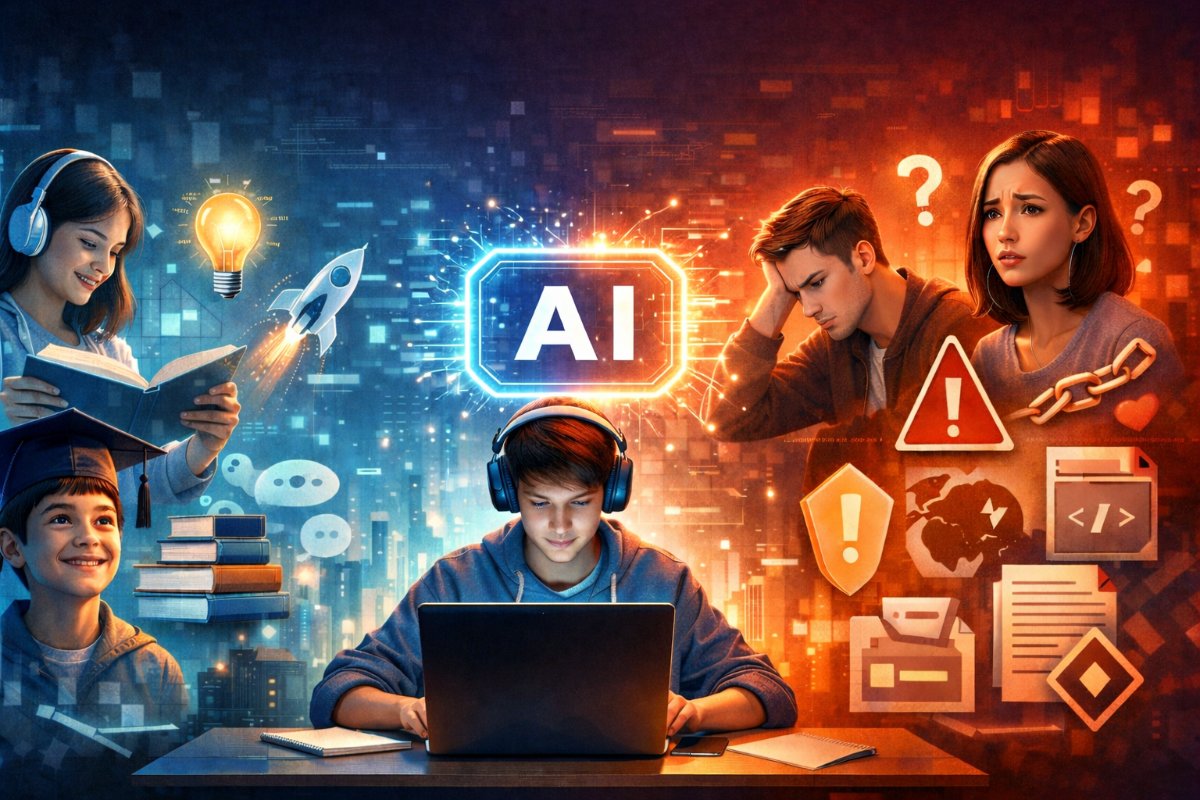
Explore the real impact of LLM use on the young generation - its benefits, risks, and how school and college students can use AI wisely.
Something Has Quietly Changed… And Most People Haven’t Noticed Yet
A school student finishes homework in 20 minutes - with perfect answers. A college student submits an essay they didn’t fully write. A young creator launches a business using nothing but prompts.
No headlines screamed about it. No big moment marked the shift. But slowly, silently… thinking itself has started to change. This is the true impact of LLM use on the young generation - not just in what they do, but in how they think, learn, and grow.
And if we don’t understand it now, we might misunderstand an entire generation later.
What Are LLMs - and Why Are They So Powerful?
Let’s simplify it.
Large Language Models (LLMs) are AI systems that can:
- Understand human language
- Generate answers, essays, and ideas
- Help solve problems instantly
Tools like ChatGPT, Gemini etc.. have turned AI into something deeply personal - a thinking companion. For young people, this is not just technology. It’s becoming part of their daily learning process.
Why the Impact of LLM Use on the Young Generation Matters
This shift is bigger than social media. Bigger than smartphones.
Because LLMs don’t just:
- Entertain
- Connect
They influence thinking, decision-making, and creativity. And that’s where things get interesting and complicated.
The Positive Impact: A Smarter, Faster, More Capable Generation
Let’s start with what’s working. Because when used correctly, LLMs are incredibly empowering.
1. Learning Without Limits
What’s happening:
Students are no longer stuck when they don’t understand something.
They can:
- Ask unlimited questions
- Get simplified explanations
- Learn at their own pace
School Example:
A Class 10 student struggling with algebra uses AI to break down equations step by step in simple language. Suddenly, math feels less scary.
College Example:
An engineering student uses AI to understand complex coding concepts and debug errors instantly.
Why this matters:
- Reduces dependency on expensive coaching
- Democratizes education
- Builds self-learning habits
2. Boost in Productivity and Efficiency
Students are completing tasks faster than ever.
What AI helps with:
- Writing assignments
- Summarizing chapters
- Generating project ideas
College Example:
A management student drafts a 1,500-word report outline in minutes, then refines it instead of starting from scratch.
Impact:
More time for:
- Deep learning
- Skill-building
- Exploration
3. Confidence and Expression Improvement
Many young people struggle to express their thoughts.
LLMs help them:
- Structure ideas
- Improve language
- Communicate clearly
School Example:
A shy student uses AI to practice English writing and speaking-gradually gaining confidence in class discussions.
4. Creativity and Innovation Explosion
This is one of the biggest advantages.
Young people are now:
- Writing blogs
- Building apps
- Starting side hustles
Real Scenario:
A college student uses AI to:
- Generate business ideas
- Create marketing content
- Launch a digital product
All without a big team.
5. Personalized Learning Experience
Every student learns differently.
AI adapts to:
- Speed
- Style
- Level
This creates a custom learning journey something traditional education struggles to provide.
The Negative Impact: What’s Quietly Going Wrong
Now let’s talk about what most people ignore.
Because the impact of LLM use on the young generation also has a darker side.
1. Decline in Critical Thinking Skills
The problem:
When answers are always available, thinking becomes optional.
Students may:
- Copy solutions
- Skip problem-solving
- Avoid deep thinking
Students Example:
A student uses AI to solve subjects questions but doesn’t understand the concepts.
Long-term risk: Knowledge without understanding.
2. Overdependence on AI
At first, AI feels like help.
But slowly:
- Homework → AI
- Notes → AI
- Ideas → AI
Result:
Students start asking: “Can I do this without AI?”
That’s a dangerous place to be.
3. Loss of Original Thinking
If everyone uses AI:
- Ideas start sounding similar
- Creativity becomes templated
Example:
Multiple students submit assignments with similar tone, structure, and arguments.
Impact:
- Reduced uniqueness
- Weak personal voice
4. Academic Integrity Issues
This is already becoming a serious concern.
Students may:
- Submit AI-generated assignments
- Bypass learning
- Misrepresent their abilities
College Example:
A student submits a perfect research paper but lacks real understanding during presentations.
5. Reduced Patience and Deep Work Ability
AI gives instant answers.
But real success requires:
- Time
- Effort
- Struggle
Impact on students:
- Low attention span
- Difficulty focusing
- Avoidance of challenging tasks
6. Emotional and Psychological Effects
This is often overlooked.
Students may feel:
- “AI is better than me”
- “My work isn’t good enough”
- “Why try if AI can do it faster?”
This affects:
- Confidence
- Identity
- Motivation
School vs College Impact: A Clear Breakdown
School Students (Ages 10–17)
Positive:
- Faster understanding of basics
- Improved curiosity
- Language development
Negative:
- Weak foundational thinking
- Habit of shortcut learning
- Reduced discipline
College Students (Ages 18–25)
Positive:
- Career acceleration
- Skill development
- Business opportunities
Negative:
- Over-reliance on AI tools
- Superficial knowledge
- Reduced originality
The Real Problem Isn’t AI-It’s How It’s Used
Let’s be clear.
AI is not the enemy.
Misuse is.
The impact of LLM use on the young generation depends entirely on one thing: Are they using AI to think better or to avoid thinking?
The Best Way to Use AI: A Practical Framework
Here’s what actually works.
1. The “Think First, AI Later” Rule
Before using AI:
- Try solving the problem yourself
- Form your own ideas
Then use AI to:
- Improve
- Validate
- Expand
2. The 70–30 Learning Model
- 70% effort from the student
- 30% support from AI
This ensures:
- Active thinking
- Real learning
3. Use AI for Understanding, Not Just Answers
Instead of asking:
- “Give me the answer”
Ask:
- “Explain this step by step”
- “Why does this work?”
4. Always Add Your Personal Layer
Whatever AI generates:
- Edit it
- Question it
- Improve it
Make it yours.
5. Focus on Skills AI Can’t Replace
Students should build:
- Critical thinking
- Creativity
- Communication
- Decision-making
These are future-proof.
What Should Be the Focus with AI for Young Generation?
This is the most important question.
Here’s the answer:
1. Learning How to Learn
AI should help students:
- Understand concepts deeply
- Explore topics independently
Not just complete tasks.
2. Building a Strong Thinking Ability
Encourage:
- Questioning
- Problem-solving
- Independent reasoning
3. Developing a Unique Voice
In a world of AI-generated content: Original thinking becomes a superpower.
4. Ethical and Responsible Usage
Students must learn:
- When to use AI
- When not to use AI
This builds integrity.
5. Blending Human Intelligence with AI Power
The goal is not to replace thinking.
It’s to enhance it.
The Future: What This Means for the Next Generation
The young generation will grow up differently.
They will:
- Learn faster
- Build quicker
- Think with AI assistance
But the real winners will be those who:
- Think independently
- Use AI strategically
- Stay original
Final Thoughts: This Is a Turning Point
The impact of LLM use on the young generation is not a small shift.
It’s a transformation.
We are raising a generation that:
- Has more power than ever
- But also more distractions than ever
The difference between success and struggle will come down to one thing: Discipline in how AI is used.
Your Turn
If you’re a student, ask yourself:
- Am I learning or just completing tasks?
- Am I thinking or just prompting?
If you’re a parent or educator:
- Are you guiding AI usage or ignoring it?
Because this isn’t just about technology. It’s about shaping minds.
And the choices made today…will define the capabilities of an entire generation tomorrow.