Part 5: Scene Structure and Pacing
By Bhavesh Rathod · Published 2026-06-05 · Industry Insights
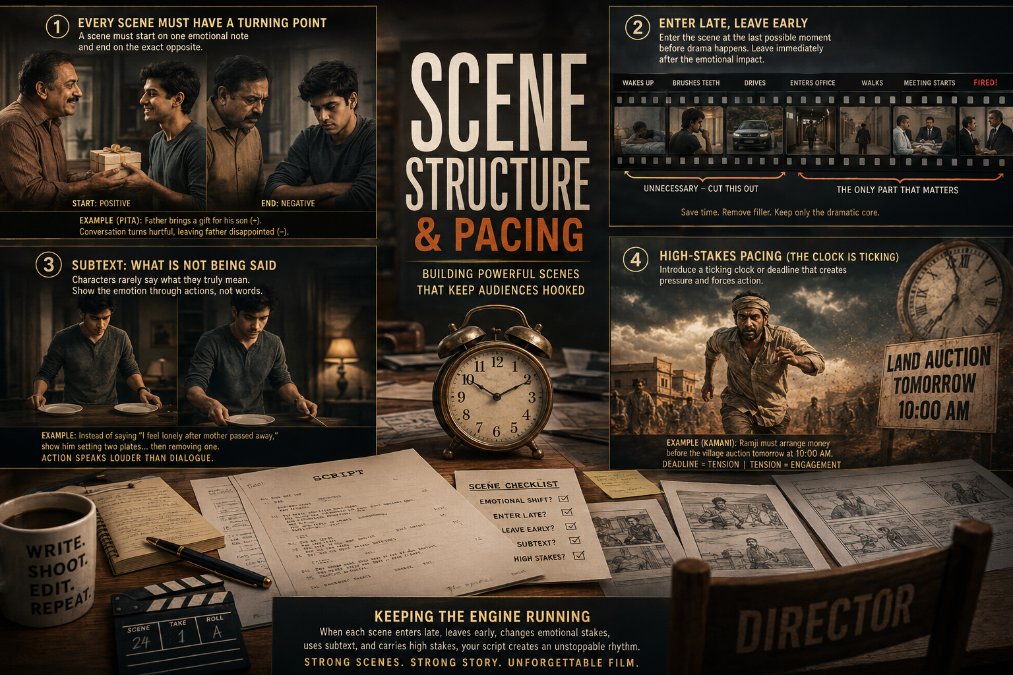
A great theme and clear character arc are essential, but if your scenes drag or feel disconnected, the audience will lose interest. Part 5 focuses on how to build individual scenes that keep the viewer glued to the screen.
1. Every Scene Must Have a Turning Point
A scene should never just deliver information; it must shift the emotional state of the story.
- The Rule: A scene must start on one emotional note (e.g., Positive) and end on the exact opposite note (e.g., Negative).
- Example (From 'PITA'): The scene starts with the Father happily bringing a small gift for his son (+). But during the conversation, the son complains about his father's old habits, leaving the father hurt and silent (-). The scene has moved from positive to negative.
2. The Law of "Enter Late, Leave Early"
Professional screenwriters do not waste time on setups that don't matter. You don't need to show a character waking up, brushing their teeth, driving their car, and opening the office door just to show them having a meeting.
- The Concept: Enter the scene at the last possible moment before the drama happens, and cut away immediately after the emotional conflict or revelation is delivered.
- Why use it?: It eliminates boring filler and increases the overall pacing of your film.
3. Subtext: What is NOT Being Said
In real life, people rarely say exactly what they are thinking, especially during highly emotional moments. This hidden meaning is called Subtext.
- The Technique: Let your characters argue about something small (like a broken tea cup or a late train) when they are actually angry about something huge (like broken trust or loneliness).
- Example: In a scene, instead of a character saying "I am feeling very lonely after mother passed away," show them quietly setting two plates on the dinner table by habit, and then slowly removing one. The action speaks louder than the dialogue.
4. High-Stakes Pacing (The Clock is Ticking)
To create intense pressure, introduce a "Ticking Clock" into your script. This is a literal or situational deadline that forces characters to act immediately.
- Example (From 'KAMANI'): Ramji doesn't just need to find money; he needs to arrange it before the village auction takes place tomorrow morning at 10:00 AM. This immediate deadline naturally escalates the tension.
Conclusion: Keeping the Engine Running
When each scene enters late, leaves early, changes the emotional stakes, and uses subtext, your script develops an unbreakable rhythm. Producers look for this structural discipline because it ensures the movie never feels slow or boring.