Mental Resilience: Practical Habits That Help You Stay Strong During Tough Times
By Ved Prakash · Published 2026-05-03 · Strategy & Leadership
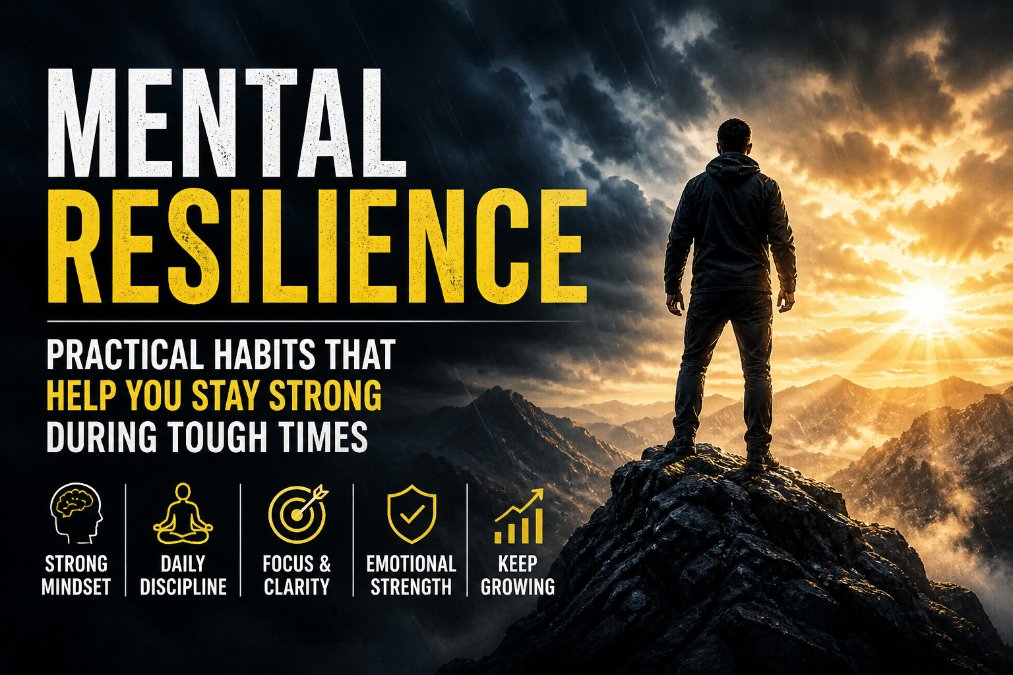
SEO-Optimized Sample Art
Niche: Mental Health | Self-Improvement
Author: SEO Content Writer | Ved Prakash
Meta Title:
Mental Resilience: Practical Habits to Stay Strong During Tough Times
Meta Description:
Learn how to build mental resilience with practical daily habits. Discover strategies to manage stress, improve emotional stability, and strengthen psychological confidence during challenging times.
Focus Keyword:
Mental Resilience
Secondary Keywords:
Build resilience, emotional stability, stress management techniques, psychological strength, coping strategies, mental health habits, emotional regulation
Mental Resilience: Practical Habits That Help You Stay
Strong During Tough Times

Mental resilience is not about suppressing emotions or pretending everything is fine. It is the ability to adapt, recover, and continue functioning despite stress, uncertainty, or setbacks.
Life does not move in a straight line. Challenges are inevitable. What determines long-term mental health is not the absence of difficulty, but the ability to respond effectively.
Mental resilience is not a personality trait. It is a set of habits that can be built intentionally.
What Mental Resilience Really Means
Many people misunderstand mental resilience as emotional toughness. In reality,
It involves flexibility, awareness, and regulation.
Emotional Flexibility

Resilient individuals do not avoid difficult emotions. They allow themselves to feel stress, disappointment, or frustration, without being overwhelmed.
Emotional flexibility includes:
- Recognizing emotions
- Accepting their presence
- Responding thoughtfully rather than impulsively
Emotional regulation strengthens long-term resilience.
Cognitive Balance
Mental resilience includes the ability to challenge catastrophic thinking.
Instead of: “This setback ruined everything.”
A resilient mind reframes: “This is difficult, but it is temporary.”
Balanced thinking reduces emotional intensity and improves stress management.
Behavioral Consistency
Even during stress, resilient individuals maintain basic routines:
- Sleep
- Nutrition
- Movement
- Daily structure
Behavioral stability supports emotional stability.
Why Mental Resilience Matters for Mental Health
Without resilience, stress accumulates. Chronic stress can lead to anxiety,
burnout, and emotional exhaustion.
Stress Is Inevitable, Suffering Is Not
External stressors cannot always be controlled. Internal responses can be trained.
Mental resilience acts as a psychological buffer between stress and breakdown.
Recovery Speed Determines Long-Term Stability

Resilient people still experience difficulty. The difference lies in recovery speed.
The faster someone regains emotional balance, the lower the long-term psychological impact.
It Builds Psychological Confidence
Each successfully handled challenge strengthens belief in one's coping ability.
This belief reduces fear of future stress and increases psychological strength.
Practical Habits to Build Mental Resilience

Mental resilience develops through consistent daily practices.
1. Strengthen Emotional Awareness
Spend a few minutes daily identifying what you feel.
Instead of saying: “I feel bad.”
Specify:
- I feel overwhelmed.
- I feel uncertain.
- I feel disappointed.
Naming emotions reduces their intensity and increases emotional regulation.
2. Maintain Non-Negotiable Basics
During tough times, protect:
- Sleep routine
- Hydration
- Light physical movement
- Regular meals
Physical stability strengthens mental health habits.
3. Limit Catastrophic Thinking
Ask yourself:
- What is in my control?
- What is temporary?
- What is the worst realistic outcome?
Structured thinking reduces anxiety and prevents mental spirals.
4. Build Support Systems
Mental resilience does not mean isolation.
Talking to a trusted friend, family member, or professional can:
- Provide perspective
- Reduce emotional pressure
- Improve coping capacity
Connection strengthens resilience.
Common Misconceptions About Mental Resilience
“Strong People Don’t Struggle”
False. Resilient people struggle, they simply recover more effectively.
“Resilience Means Ignoring Pain”
Avoidance increases long-term stress. Healthy resilience involves
processing emotions.
“You Either Have It or You Don’t”
Mental resilience is trainable. Like physical strength, it improves
with practice.
Long-Term Impact of Developing Mental Resilience
When mental resilience improves:
- Stress becomes manageable
- Emotional stability increases
- Self-confidence strengthens
- Fear of failure decreases
Resilience does not remove challenges. It changes how you move through them.
Conclusion
Mental resilience is not about becoming unbreakable. It is about becoming adaptable.
Through emotional awareness, cognitive balance, and daily behavioral
consistency, resilience can be built intentionally.
In difficult times, do not aim to eliminate stress.
Aim to improve your response.
That is where true psychological strength lies.
Frequently Asked Questions About Mental Resilience
Q. What is mental resilience?
Mental resilience is the ability to adapt, recover, and maintain emotional stability during stressful or challenging situations.
Q. Can mental resilience be developed?
Yes. Mental resilience is not a fixed trait. It can be strengthened through daily habits such as emotional awareness, structured thinking, and maintaining routines.
Q. How does mental resilience help with stress?
Resilience acts as a buffer between stress and emotional breakdown. It improves recovery speed and reduces the long-term impact of stress.
Q. What are simple ways to build resilience daily?
Simple practices include:
- Naming emotions
- Maintaining sleep and nutrition
- Challenging negative thoughts
- Staying socially connected
Consistency is more important than intensity.
Q. Is resilience the same as being emotionally strong?
Not exactly. Emotional strength often implies suppression. Mental resilience involves emotional flexibility, regulation, and balanced thinking.