CPQ: A Simple Guide for Consultants
By Anshul Gupta · Published 2026-06-01 · Technology & Innovation
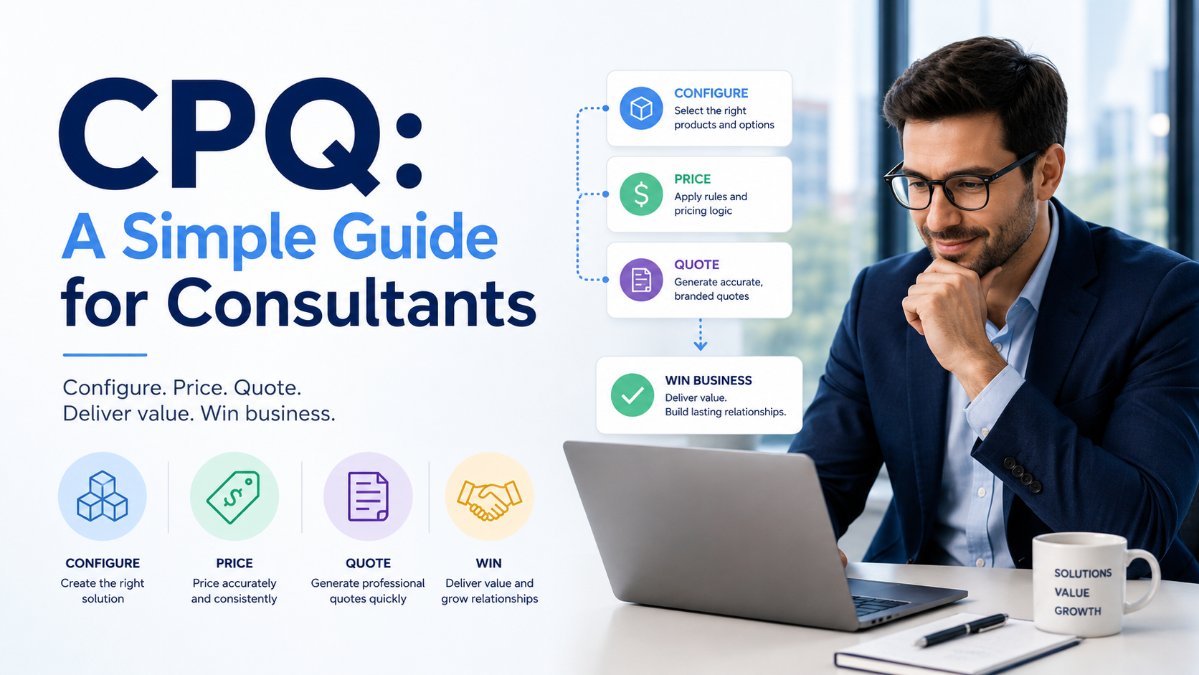
Ever wondered how companies streamline their sales processes effortlessly?
If you’ve ever watched a sales team struggle with quotes, configurations, and pricing, you might be curious about how they can transform their operations into a smooth, efficient machine. This is where CPQ, or Configure, Price, Quote, comes into play. Let’s break it down into bite-sized pieces so you can understand its significance and how it can benefit your clients.
What is CPQ and Why Should You Care?
At its core, CPQ stands for Configure, Price, Quote. It’s a type of software that helps businesses streamline their sales process by automating the generation of product configurations, accurate pricing, and quotes. Think of it as a digital assistant for sales teams, cutting down on the manual work and reducing the chances of errors.
So, why should consultants like you care? CPQ can significantly impact the sales processes of your clients. By implementing a CPQ solution, businesses can reduce the time it takes to generate quotes from hours or days to just a few minutes. This efficiency can lead to quicker decision-making, happier customers, and, ultimately, increased revenue. Imagine a company that can fulfill customer requests swiftly and with precision this is where CPQ truly shines.
The real-world impact of CPQ is profound. Companies that adopt CPQ often report higher win rates and improved customer satisfaction. For example, a software firm that used to take days to send out custom quotes now does it in minutes, leading to faster deals and a notable bump in sales. In a competitive landscape, such advantages can make all the difference.
The Key Components of CPQ Explained
CPQ is built around three main components: Configuration, Pricing, and Quoting. Let’s explore each one.
Configuration: Tailoring Products to Customer Needs
Configuration is all about customizing products to fit the specific needs of customers. For instance, if a client wants a software package with certain features, CPQ helps sales reps quickly determine which combinations are possible without running into compatibility issues. This ensures that customers get exactly what they want without overwhelming the sales team with options.
Pricing: How Dynamic Pricing Works in CPQ
Pricing in CPQ is more than just putting a number on a product. It involves dynamic pricing strategies that adjust based on various factors, like market demand, competitor prices, or customer profiles. For instance, if a company wants to offer a discount to a loyal customer, CPQ can automatically calculate the new price without manual intervention. This not only saves time but also enhances the customer's experience by providing timely and tailored offers.
Quoting: Generating Accurate Quotes Quickly
The quoting process is where CPQ really shines. It allows sales reps to generate accurate quotes within minutes. Instead of fiddling with spreadsheets or complex pricing models, they can simply input the customer’s requirements, and the software does the rest. This reduces errors and ensures that customers receive consistent, accurate pricing every time.
A Day in the Life: How CPQ Transforms Sales Teams
Imagine a sales team at a telecommunications company. Before implementing CPQ, they spend hours preparing proposals, double-checking pricing, and ensuring configurations are correct. This often leads to delays and frustration.
After CPQ implementation, the scenario shifts dramatically. Sales reps can now open the CPQ tool, enter customer specifications, and within minutes, they have a professional-looking quote ready to send. They spend less time on paperwork and more on building relationships with clients.
The benefits post-implementation are substantial. Teams experience reduced quote generation times, higher accuracy in pricing, and a noticeable increase in sales velocity. This transformation not only boosts morale but also contributes to the bottom line.
Common Misconceptions About CPQ
Despite its advantages, CPQ comes with its share of misconceptions.
Myth: CPQ is Only for Large Enterprises
A common mistake is thinking CPQ solutions are only for big corporations. In reality, small and mid-sized businesses can also reap the benefits. Even companies with smaller sales teams can streamline processes and improve customer experiences through CPQ.
Myth: CPQ Software is Too Complicated to Use
Another myth is that CPQ software is too complex. While it’s true that some systems can be intricate, many are designed to be user-friendly. Training and support can help teams adapt quickly, allowing them to maximize the tool's potential without feeling overwhelmed.
Myth: CPQ Eliminates the Need for Sales Reps
Some fear that CPQ will replace sales reps, but the opposite is true. CPQ empowers sales professionals by freeing up time spent on administrative tasks, allowing them to focus on what they do best: selling and building relationships.
Choosing the Right CPQ Solution for Your Clients
If your clients are considering a CPQ solution, it's crucial to guide them in selecting the right one.
Key Features to Look for in CPQ Software
Important features include user-friendly interfaces, integration capabilities with existing systems, and robust reporting tools. The best CPQ solutions allow easy customization, so they can adapt as the business evolves.
Common Pitfalls to Avoid When Selecting a Solution
One common pitfall is failing to involve the sales team in the selection process. Their insights are invaluable in choosing a solution that will genuinely help them. It’s also crucial to ensure the solution can scale as the business grows.
Questions to Ask Vendors During Evaluation
When evaluating vendors, encourage your clients to ask questions like, “How long does implementation take?” or “What type of training and support do you offer?” These questions can reveal much about how easy or challenging the transition will be.
Measuring Success: KPIs to Track After Implementing CPQ
Implementing CPQ is just the beginning; measuring its success is essential.
Key Metrics to Assess CPQ Effectiveness
Key performance indicators (KPIs) to track include quote turnaround time, accuracy of quotes, and win rates. Monitoring these metrics will help identify areas for improvement.
How to Gather Feedback from Sales Teams
Regular feedback from sales teams is vital. Encourage an open dialogue where they can share their experiences with the CPQ tool, helping to refine processes and address any issues early on.
Adjusting Strategies Based on Performance Data
Using performance data lets you adjust strategies as needed. If a particular pricing model isn’t yielding results, it’s time to rethink and adapt.
Your CPQ Checklist: Ready to Get Started?
So, how do you help your clients implement CPQ? Here’s a simple checklist:
- Assess Needs: Understand the specific requirements of the sales team.
- Research Solutions: Look for CPQ software that meets those needs.
- Involve the Team: Engage sales reps in the selection process.
- Plan Implementation: Create a detailed plan for rollout, including training sessions.
- Monitor and Adjust: Regularly review KPIs and gather feedback to make necessary adjustments.
Checklist of Tools and Resources Needed
- CPQ software selected
- Training materials for sales teams
- Integration plans with existing systems
Final Thoughts and Encouragement to Take Action
Implementing CPQ can seem daunting, but the efficiency and accuracy it brings to your clients' sales processes make it a worthwhile investment. As consultants, your role is to simplify this journey for them and help them embrace this transformative tool.
Are you ready to help your clients streamline their sales processes? What questions do you have about getting started with CPQ?