Part 8: Theme, Symbolism, and Subtext: Writing Stories That Stay With the Audience
By Bhavesh Rathod · Published 2026-07-21 · Industry Insights
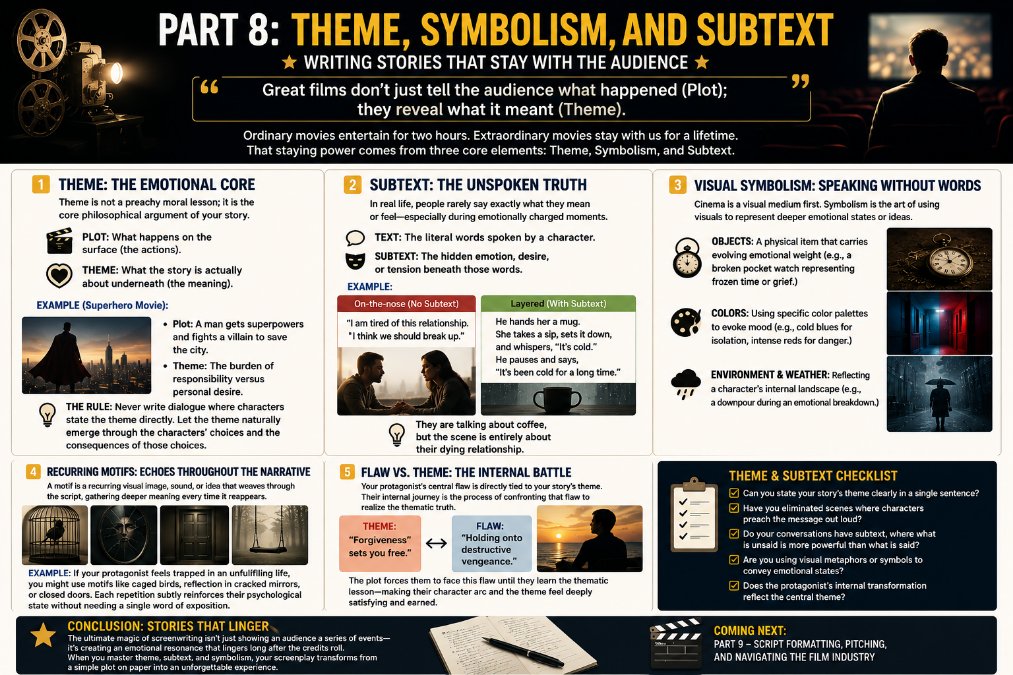
Great films don't just tell the audience what happened (Plot); they reveal what it meant (Theme)."
When the lights come up and audiences leave the theater, they might forget specific dialogue or plot turns, but they never forget how the story made them feel or what it made them question.
Ordinary movies entertain for two hours. Extraordinary movies stay with us for a lifetime. That staying power comes from three core elements: Theme, Symbolism, and Subtext.
1. Theme: The Emotional Core
Theme is not a preachy moral lesson; it is the core philosophical argument of your story.
- Plot: What happens on the surface (the actions).
- Theme: What the story is actually about underneath (the meaning).
Example: In a superhero movie:
- Plot: A man gets superpowers and fights a villain to save the city.
- Theme: The burden of responsibility versus personal desire.
The Rule: Never write dialogue where characters state the theme directly. Let the theme naturally emerge through the characters' choices and the consequences of those choices.
2. Subtext: The Unspoken Truth
In real life, people rarely say exactly what they mean or feel-especially during emotionally charged moments. Great screenwriting mirrors this human reality.
- Text: The literal words spoken by a character.
- Subtext: The hidden emotion, desire, or tension beneath those words.
Example: A couple on the verge of a breakup are making morning coffee. On-the-nose (No Subtext): "I am tired of this relationship. I think we should break up." Layered (With Subtext): He hands her a mug. She takes a sip, sets it down, and whispers, "It's cold." He pauses and says, "It's been cold for a long time." They are talking about coffee, but the scene is entirely about their dying relationship.
3. Visual Symbolism: Speaking Without Words
Cinema is a visual medium first. Symbolism is the art of using objects, colors, or visual imagery to represent deeper emotional states or narrative ideas.
- Objects: A physical item that carries evolving emotional weight (e.g., a broken pocket watch representing frozen time or grief).
- Colors: Using specific color palettes to evoke mood (e.g., cold blues for isolation, intense reds for danger or repressed passion).
- Environment & Weather: Reflecting a character's internal landscape through external surroundings (e.g., a sudden downpour during a character's emotional breakdown).
4. Recurring Motifs: Echoes Throughout the Narrative
A motif is a recurring visual image, sound, or idea that weaves through the script, gathering deeper meaning every time it reappears.
Example: If your protagonist feels trapped in an unfulfilling life, you might use motifs like caged birds, reflection in cracked mirrors, or closed doors. Each repetition subtly reinforces their psychological state without needing a single word of exposition.
5. Flaw vs. Theme: The Internal Battle
Your protagonist's central flaw is directly tied to your story's theme. Their internal journey is the process of confronting that flaw to realize the thematic truth.
- If your theme is "Forgiveness sets you free," your protagonist's main flaw should be "Holding onto destructive vengeance."
- The plot forces them to face this flaw until they learn the thematic lesson-making their character arc and the theme feel deeply satisfying and earned.
🛠️ The Theme & Subtext Checklist
Before finalizing your script, test it against these questions:
- [ ] Can you state your story's theme clearly in a single sentence?
- [ ] Have you eliminated scenes where characters preach the message out loud?
- [ ] Do your conversations have subtext, where what is unsaid is more powerful than what is said?
- [ ] Are you using visual metaphors or symbols to convey emotional states?
- [ ] Does the protagonist's internal transformation reflect the central theme?
Conclusion: Stories That Linger
The ultimate magic of screenwriting isn't just showing an audience a series of events-it's creating an emotional resonance that lingers long after the credits roll.
When you master theme, subtext, and symbolism, your screenplay transforms from a simple plot on paper into an unforgettable experience.
Coming Next: Part 9 – Script Formatting, Pitching, and Navigating the Film Industry