Script vs. Screenplay: The Professional Blueprint of Storytelling
By Bhavesh Rathod · Published 2026-04-28 · Industry Insights
Meta Title:
Script vs. Screenplay: Key Differences for Aspiring Filmmakers
Meta Description:
Learn why understanding the difference between a script and a screenplay is crucial for your career. Master visual storytelling with this expert guide.
Introduction: More Than Just Words
In the world of creative writing, the terms Script and Screenplay are often used interchangeably. However, for a professional storyteller, they represent different stages of a project's evolution and distinct technical requirements. If you want to transition from a writer to a visual storyteller, understanding this distinction is non-negotiable.
1. What is a Script? (The Universal Term)
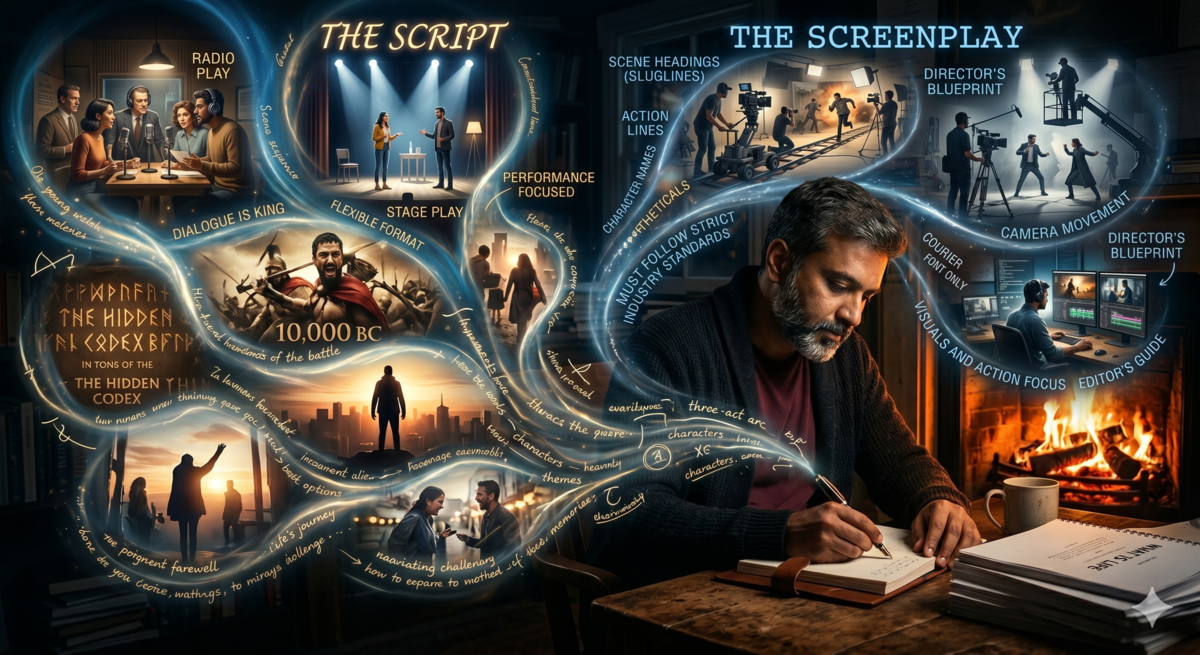
A "Script" is a broad, umbrella term that applies to any written document intended for performance. If someone is reading lines to an audience or a microphone, they are reading a script.
- Focus: Prioritizes dialogue, narration, and the basic sequence of events.
- Flexibility: The format can vary wildly depending on the medium.
- Examples: Radio plays, podcasts, stage plays, and corporate commercials.
2. What is a Screenplay? (The Visual Blueprint)
A "Screenplay" is a specialized script written specifically for the screen (Film or Television). It isn't just a story; it is a technical blueprint that guides the director, cinematographer, and editor.
- Focus: Visual action and "unspoken" storytelling.
- The Golden Rule: If the audience can’t see it or hear it, it doesn’t belong on the page.
- Key Elements: Scene Headings (Sluglines), Action Lines, and Character Cues.
Key Differences: A Quick Comparison
FeatureScriptScreenplayMediumRadio, Theater, AdsMovies, TV Shows, OTTDetailingDialogue-heavyAction and Visual-heavyFormatFlexible / InformalStrict Industry Standards (Courier 12pt)PurposeWords for performanceVisual map for productionThe Transition: Show, Don't Tell
A great screenplay isn't just about what the characters say; it's about what the audience sees. This is the "Show, Don't Tell" principle in action.
- In a Script (Telling): "John feels deep regret about his past."
- In a Screenplay (Showing): "John stares at the dusty medals in the drawer. He reaches for one, then pulls his hand back as if the metal were white-hot."
Pro Tip: Spec vs. Shooting Script
- Spec Script: A screenplay written on "speculation" (without being paid upfront).
- Shooting Script: The final version used on set that includes camera angles and scene numbers.
Conclusion: Mastering the Craft
Whether you are drafting a simple script for a digital ad or a complex screenplay for a sci-fi epic, the goal remains the same: to move the audience. To reach the top of the industry, you must master the technical rigor of the screenplay while preserving the creative soul of the script.